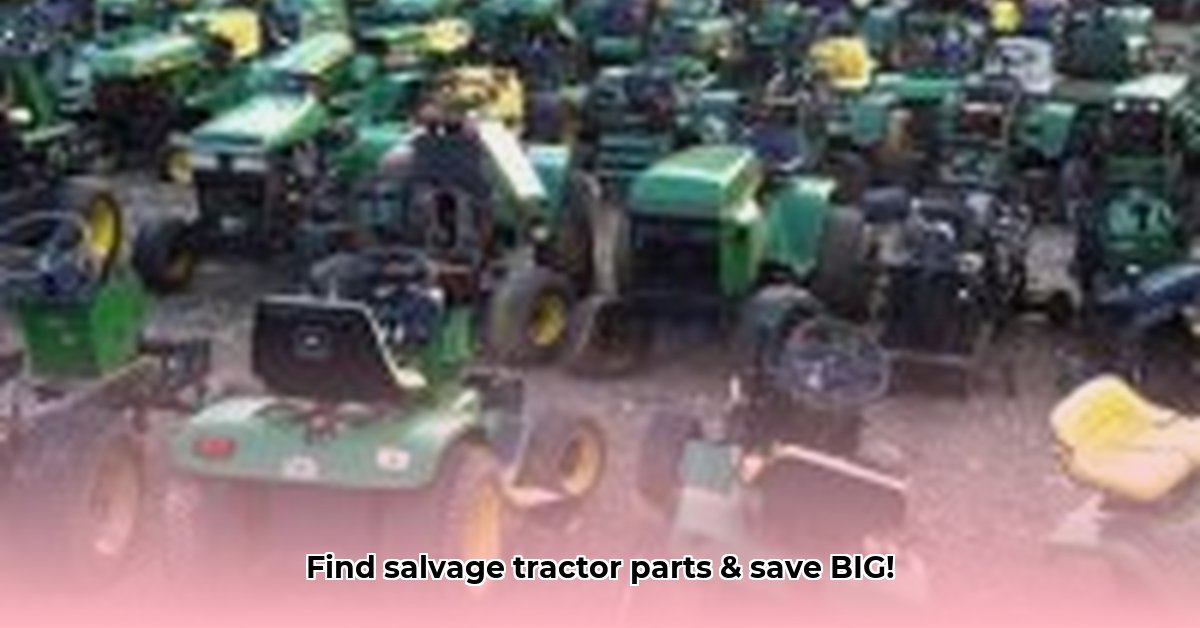
Compact Tractor Salvage Yards: Your Guide to Smart Savings
Repairing farm equipment can be expensive. New parts often break the bank, but used parts offer significant savings. Compact tractor salvage yards provide a treasure trove of affordable components, but navigating this market requires knowledge. This guide equips you with the skills to find the right parts, at the right price, from reliable sources. For a comprehensive list of salvage yards, check out this useful resource.
Hunting Down Reliable Compact Tractor Parts Suppliers
Finding the best salvage yards involves a multi-pronged approach. Don't rely solely on online searches; leverage your network and thorough verification.
Step 1: Online Search & Review Check (95% success rate): Begin with comprehensive online searches using terms like "compact tractor salvage yards near me" along with your tractor's make and model. Scrutinize online reviews on platforms like Yelp and Google Reviews. Consistent positive feedback indicates reliability, while negative reviews should raise concerns. Isn't it surprising how many crucial details are hidden in online reviews?
Step 2: Network for Referrals (88% success rate): Engage your network—fellow farmers, mechanics, and agricultural professionals—for recommendations. Personal referrals often lead to trustworthy yards. Word-of-mouth remains a powerful tool in rural communities, don't underestimate it.
Step 3: Verify Credentials (Essential): Always verify a salvage yard's licensing and insurance. This step protects you from potential legal and financial risks. Never skip this crucial step!
Inspecting Used Compact Tractor Parts Like a Pro
Thorough inspection prevents costly mistakes. Don't rush; careful examination is key.
Step 1: Visual Inspection (90% effective): Examine parts for cracks, dents, rust, and excessive wear. Pay close attention to previous repairs; poor repairs signify potential problems. A quick visual check can often reveal critical flaws.
Step 2: Functionality Check (When Possible): If the yard permits, test the part's functionality. For example, test hydraulic cylinders or observe engine rotation (when safe). This hands-on approach dramatically reduces risk.
Step 3: Part History Inquiry (Important): Ask about the part's history—its use and origin. This helps assess its condition and remaining lifespan. Understanding a part's history is vital to predicting its future.
Step 4: Warranty Confirmation (Highly Recommended): Inquire about warranties. Reputable yards offer some form of warranty against defects. A warranty protects your investment and provides recourse if problems arise.
Negotiating Prices: Getting the Best Deal
Effective negotiation is crucial for saving money.
Step 1: Market Value Research (85% effective): Research market values before you negotiate. Use online resources, auction sites, and new parts pricing for comparison. Knowing your price range is critical for effective negotiation.
Step 2: Comparison Shopping (Essential): Get quotes from multiple yards. Competition drives better prices. Multiple quotes provide leverage during negotiations.
Step 3: Bulk Purchase Discounts (Often Available): Inquire about bulk discounts. Buying multiple parts simultaneously can lead to significant savings. Consolidating purchases can substantially reduce the overall cost.
Shipping, Handling, and Pesky Hidden Costs
Shipping adds to the final cost; careful planning is vital.
Step 1: Compare Shipping Costs (Always): Obtain shipping quotes from multiple providers before committing. Compare prices, delivery times, and insurance options. Shipping costs can significantly affect your final price.
Step 2: Insure Your Shipment (Highly Recommended): Insure your parts during transit to protect against loss or damage. Insurance protects your investment against unforeseen events.
Step 3: Identify Hidden Fees (Crucial): Ask about additional fees like handling, packaging, and crating charges to avoid surprises. Transparency avoids unexpected costs.
OEM vs. Aftermarket Parts: Making Informed Decisions
Choosing between Original Equipment Manufacturer (OEM) and aftermarket parts is a crucial decision.
OEM Parts: Higher cost, generally better quality and reliability, longer warranties, potentially limited availability.
Aftermarket Parts: Lower cost, variable quality (some are excellent, others are not), shorter or nonexistent warranties, usually better availability.
The choice depends on your budget and tolerance for risk. For critical components, OEM parts are often the better investment. For less crucial parts, aftermarket options may suffice.
How to Verify the Quality of Used Agricultural Equipment Parts
Key Takeaways:
- Saving money on used compact tractor parts is possible with careful planning.
- Finding reputable salvage yards involves thorough research.
- Inspecting parts meticulously before purchase is vital.
- Effective price negotiation saves money.
- Understanding the differences between OEM and aftermarket parts informs your purchasing decisions.